
“There is a time for hope, and there is a time for realism. But what is needed now is beyond hope and realism. This is a time when we ought to dedicate ourselves to bringing about the greatest shift in human consciousness and in the way we live.” – Ben Okri, Tiger Work
There is a strange sort of power in a name; maybe it’s in the knowledge of positioning something in our minds. We love sorting and the sense that all is accounted for. I think the draw to knowing the names of plants comes from the feeling of relief of knowing your neighbors. When we take the time to develop meaningful relationships with our neighbors, we begin to depend on one another for mutual care. Maybe it’s in the watering of plants while another is away, or it is the sharing of soup or cut flowers. Such relationships start with taking the time to slow down and introduce yourself.
Learning the names of plants can be daunting; there are thousands of plants that often look alike. However, by taking the time, we can begin to parcel out and observe the differences. I always recommend starting small, learning just a few of the basic plants that you see most often in your day-to-day. Whenever I am on a hike, I always stick with learning one new plant, repeating the name over and over in my head, and following through in the next few days to make sure it has stuck. Over time, these gradual learnings build on one another, layering into a more complete understanding of our ecosystem. Next thing you know, you are on a hike with friends, pronouncing with great glee that the flower they are admiring is Clarkia purpurea.
In taking the time to learn some of your native plants, you are, in fact, choosing to honor those plants. For us to go about healing the world, we need to understand the rich diversity that makes up our ecosystems. By differentiating between plants, we show that we respect each in turn. With time, we may even begin to understand the unique characteristics of each plant. That the service berries are always stripped of fruits by birds, that the goldenrod may choose to spread beyond our desires in the garden, and that the evening primrose flowers remain open into the dawn hours. Like the relationships with my neighbors, as I come to know the names of these plants, I begin to care for each in turn. I know that the pink flowering currant may need to be staked in its first year of vigorous growth, or the kindness in guiding the creeping strawberries to where I want their rhizomes to spread.
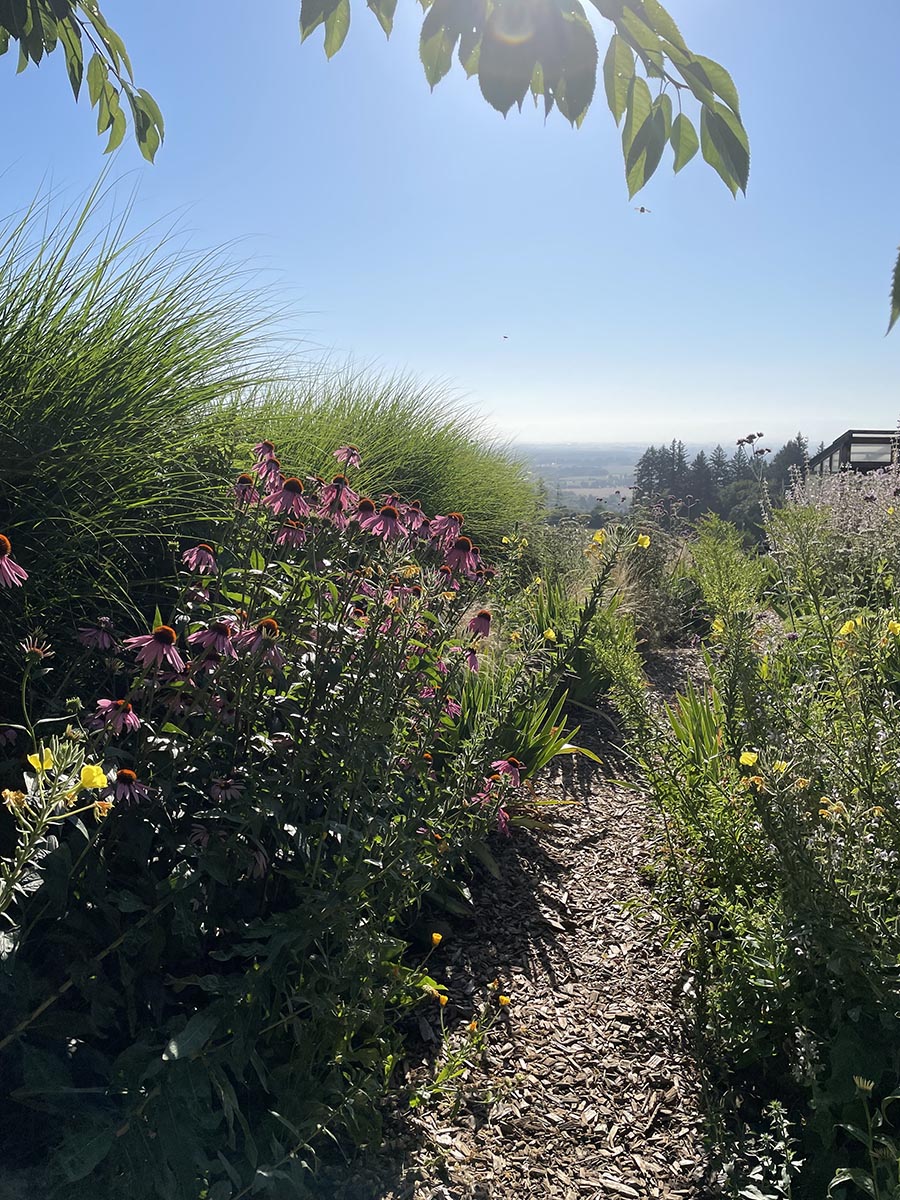

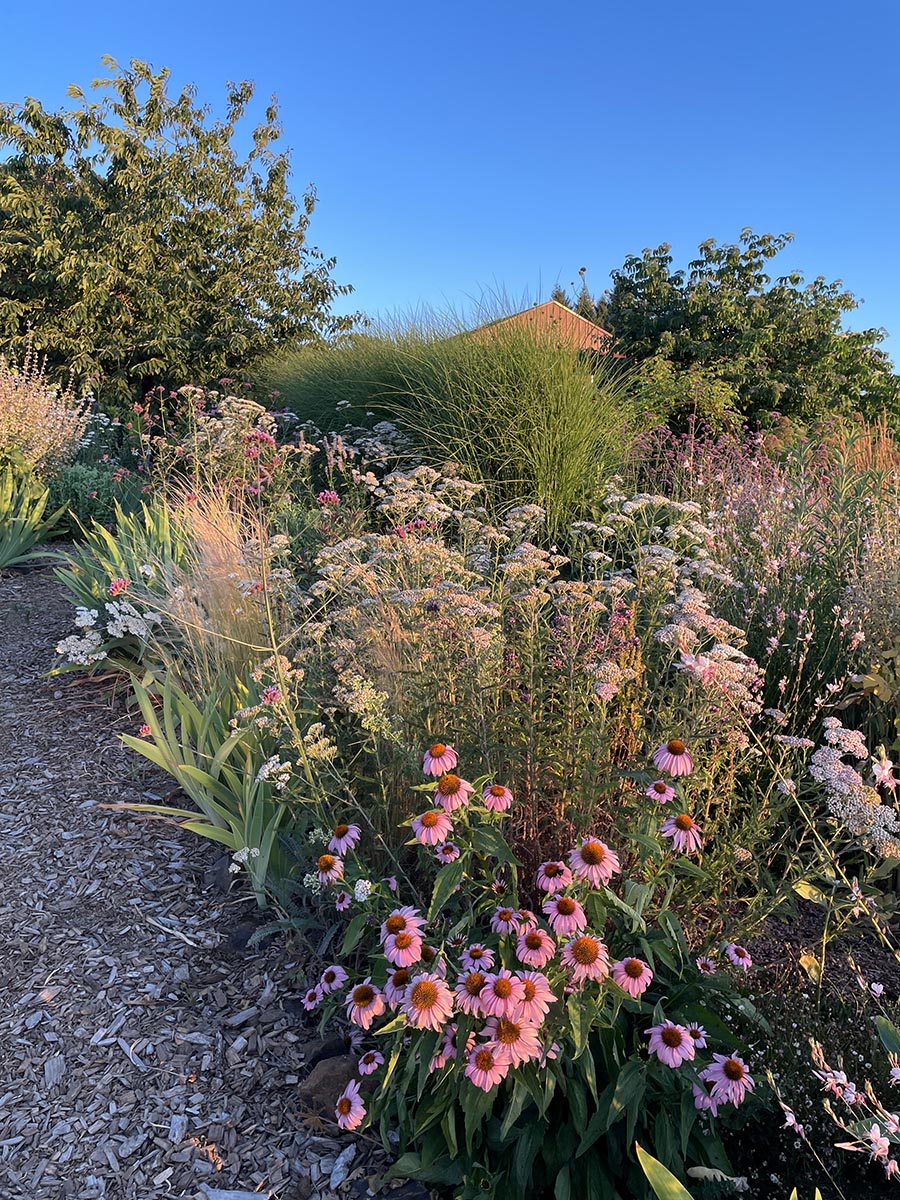
When it comes to my own title, I find myself often uncomfortable when trying to describe my work. Officially, my title is stewardship coordinator, a purposefully vague statement given the wide range of tasks that occupy me in a given day. I am never upset at whatever the given name for my role is. When someone calls me a gardener, I gladly take up the term, proud to be part of the passionate gardening community that tends to their spaces. So often names take on a rigidity, I think, by allowing us the range of many names, we can allow all these things to bleed into one another. Why must a gardener be separate from a farmer, or likewise an earth steward? Given the work we have at hand to heal this world, I don’t think these jobs should be mutually exclusive. I want to grow nutritious food that feeds my community, while also planting native hedgerows. I want to tend to my bee hives for the medicine of honey, while also creating habitat to support native invertebrates.
This is the double-sided nature of naming. We can choose to neglect the knowing of names and do an injustice to those we leave unnamed. We can also become so tightly attached to one name that we are unwilling to take up others, constricting our world views or responsibilities. What I am advocating for is that we express nuance each day, that we enter the world with curiosity and openness, being receptive to names and willing to learn different ones. Maybe it looks like a common name, like Osoberry, or the Latin name, Omeleria cerasiformis. Maybe it’s making up your own name that differentiates it from others, like a white flowered, shrubby plant. I guarantee that once you open yourself to looking for the names of plants, you will start to see those very plants everywhere. You will wonder, How did I never know you?
– With Love from the Garden
Shannon
Farm to Table
Our tasting room menu this month features tomatoes, potatoes, shishito peppers, lettuce, beets, kohlrabi, boysenberries, cucumbers, zucchini, herbs, and eggs.