
“When the natural world is understood as a gift instead of private property, there are ethical constraints on the accumulation of abundance that is not yours to own.”
-Robin Wall Kimmerer, The Serviceberry
Some may know that I tend two gardens, one at my home and the community garden at Brooks. Summer days often find me in the dawn hours occupied by chickens, honeybee hives, vegetable production, and insectary gardens. By the afternoon, I will be back at my home, weeding the bindweed, spreading compost, and deadheading flowers in my own garden. At this pace, I have been discovering the differences between these two ways of gardening. The Brooks garden is a collective space, one where people walk the paths while I work, where they can see my successes and my failures. I plant and plan things with guests in mind. This is a mindset I have always known, a way of gardening that is shared, not kept to myself. The produce is held collectively. Some weeks I cut buckets of zinnias for coworkers to take home, and many breaks are taken by us all in the shade of the raspberries, where we pick together.
In the last year, I have come to know what it means to hold a garden in private. Through some luck, I have a patch of earth that I own, a privilege that I don’t take lightly. This last year has seen me removing the lawn and in its place establishing native meadows, a veggie garden, a medicinal border, and a night-blooming garden. The garden has been a quiet place where I can find deep restoration. For many, this is the routine of backyards; they are spaces pulled apart from others, fenced-off realms that we rule over and claim with colonial consistency.
However, I’ve noticed that there is this unique space in the home garden that is somehow exempt from the mindset of exclusive domain. The front yard is a kind of borderland. Neither yours nor theirs, it’s a community space that, although it is owned by you, is held to the eyes of the community. The front garden exemplifies the kind of gardening I engage in at work; it is held in the community’s gaze and is a shared space.
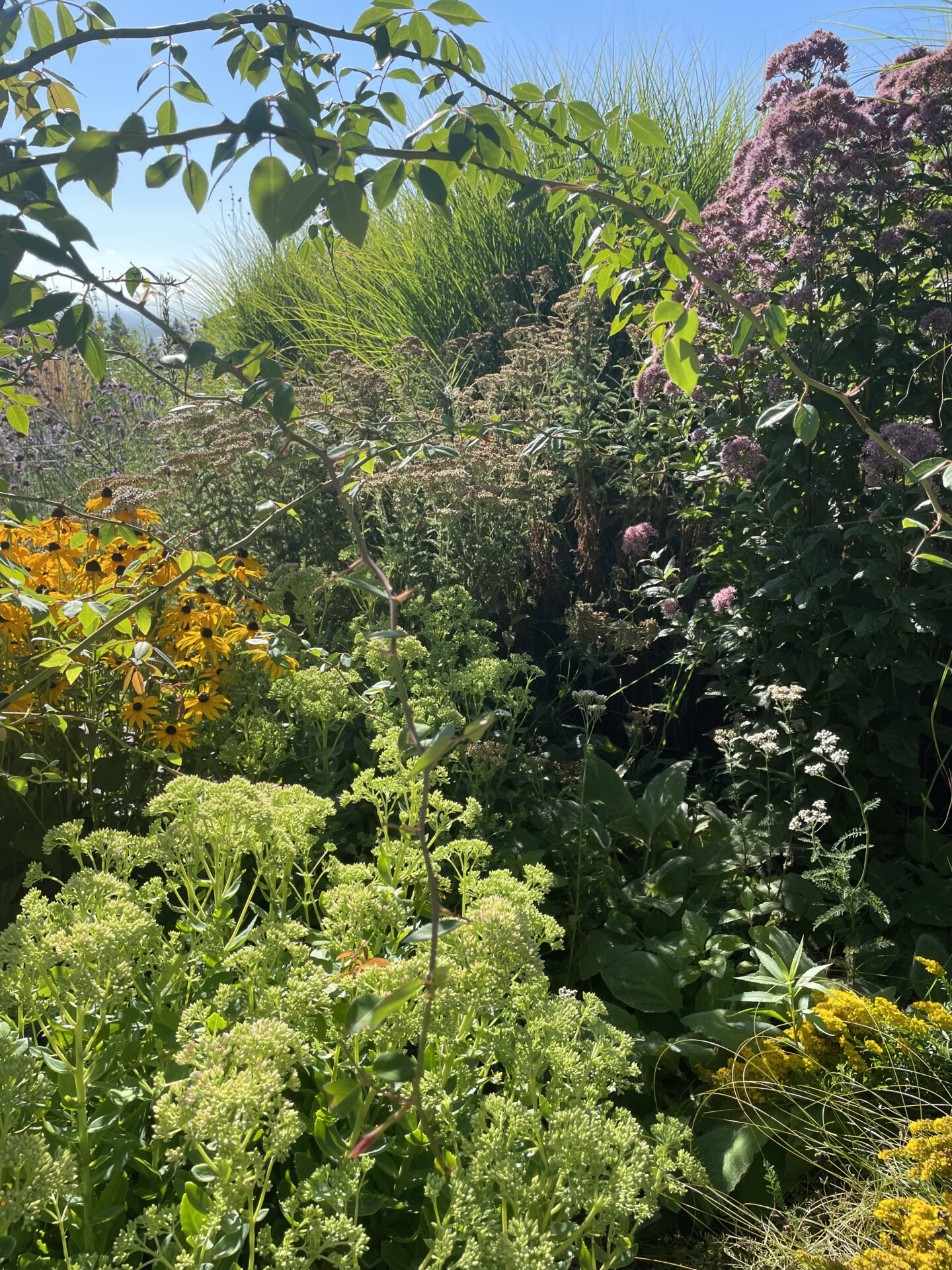

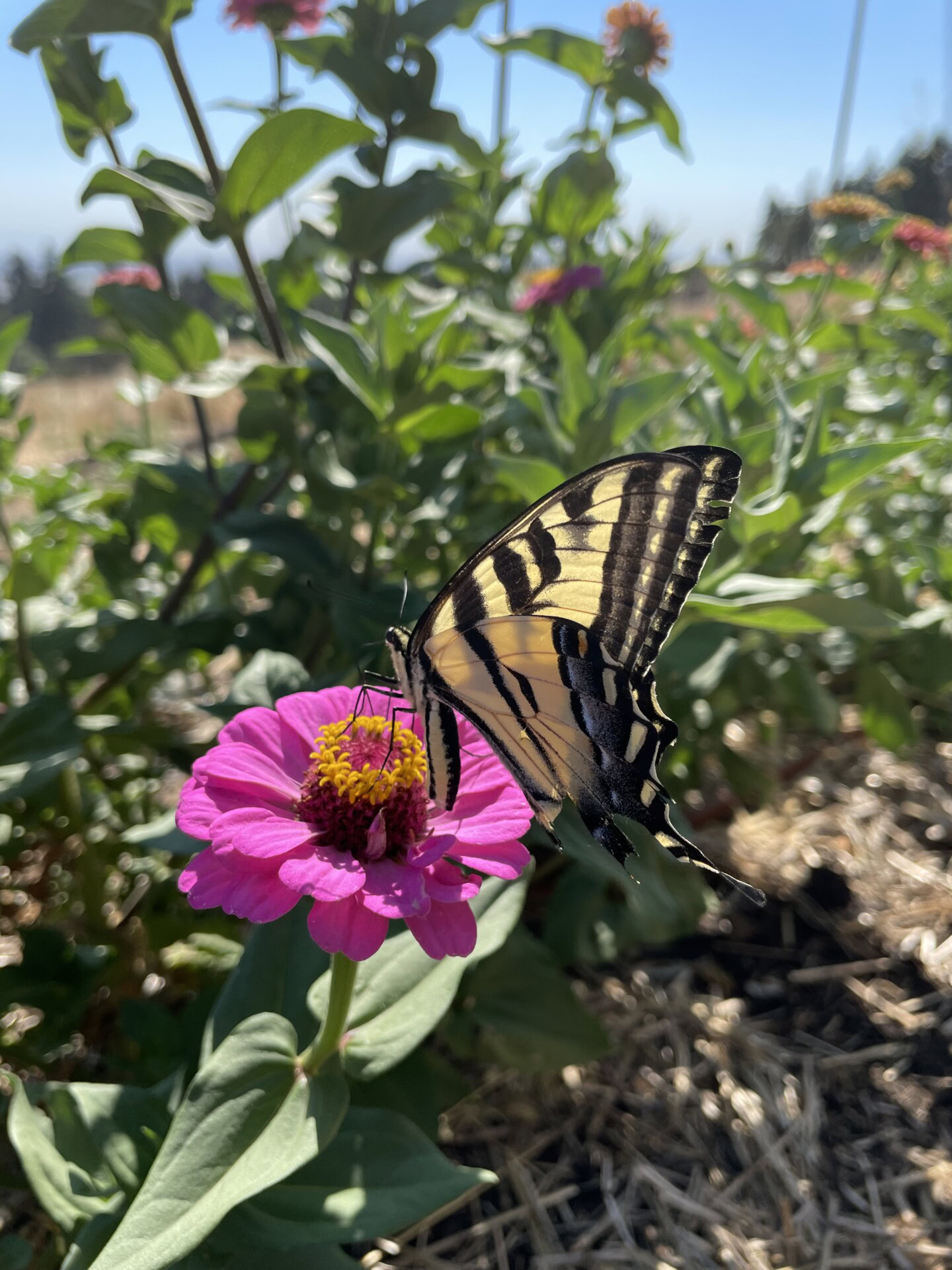
Gardens that are held collectively are a unique opportunity to allow others to participate in the privileged ownership of land. Our gardens often are shared with wildlife; in fact, many of us garden for this very reason. Taking it one step further, we can choose to cultivate beauty in our front lawns to share with our neighbors. My own front yard is a deeply enriching gardening experience, an opportunity to aid others in their own gardening endeavors. It is a mix of natives and perennial Mediterranean herbs that can take the hot afternoon sun that shines on it, requiring little water while inviting in pollinators. My house stands at the corner of the street where the neighborhood’s mailboxes are all held. The neighbors walk past my yard each day to receive their mail, and in this walk they never fail to comment on the front garden. It is a garden that we all share and delight in, not a drop of lawn is in it; instead, it is bustling with life and activity.
Collective gardens show us that we are all worthy of beauty, that we can share in the delights of flowers and the wildlife that this can bring. These community spaces remind us that in every life, if we take the time to slow down and observe, what we find can bring us awe. Maybe it’s a stroll to collect the mail, noticing the bumblebees floating in the front yard pollinator meadow, or your coworkers sharing in the picking of raspberries tucked deep in the shade of the cherry tree. Gardens that are shared in this way are a practice in reciprocity, a living reminder that the work we have at hand will take each of us doing our part and sharing in the delights that we find in it.
With Love from The Garden,
Shannon
Farm to Table
Our tasting room menu this month features a tasting menu that highlights ingredients grown in our very own estate garden and sourced directly from local producers.