
If you are a wine lover, nothing is more disappointing than opening a bottle and realizing something is not quite right. Learning how to recognize wine faults can greatly enhance your appreciation and save you from sipping spoilage. This guide will help you spot the three most common wine faults, understand what causes them, and learn how to train your palate to detect flaws with confidence.
Identifying Wine Faults Matters
Wine is a living, evolving product, and sometimes things go wrong in the bottle. Identifying wine faults ensures you are getting the best experience from your wine regardless of where you are tasting it. (Yes, even some hosts in tasting rooms can miss these flaws when pouring wines for you to sample, especially if they are at the beginning of their own wine journey.)
For wine tasters, understanding faults is a must-have skill. It is the difference between thinking “I don’t like this wine” and realizing “this wine is flawed.” Big difference.
It is worth the time to gain just a bit of knowledge and some sensory training so you can avoid pouring money down the drain, or worse…serving a spoiled bottle to guests. That is incredibly embarrassing. Take our word for it.

3 Most Common Wine Faults
1 – Cork Taint
One of the most infamous wine faults is cork taint, caused by a compound called TCA (2,4,6-trichloroanisole). This chemical forms when natural corks interact with chlorine and fungi. This is the reason bleach is a huge no-no-no in wineries. The result is a wine that smells like a damp basement, wet newspaper, or a moldy sponge. It is unpleasant to say the least.
How to recognize it:
- Musty, moldy aroma (primary indicator)
- Muted fruit notes
- Dull taste
Pro Tip: If your wine smells off before you taste it, trust your nose. Cork taint is fairly common, with some professional tasters reporting impacted wine in upwards of 7% of bottles sealed with natural cork. When you detect it, do not hesitate to return or exchange the wine. Chances are that others have reported the same issue.
2 – Oxidation
Oxidized wine is what happens when wine is overexposed to air, either due to a faulty seal or aging past its prime. It is worth noting that while oxidation is considered a flaw in most wines, it is part of intentional winemaking styles for other wines, most commonly Sherry and Madeira.
How to recognize it:
- Orange or brownish color
- Nutty, bruised apple, raisin (or even worcestershire sauce) aromas
- Loss of freshness and brightness
Pro Tip: This often happens with older bottles, wines improperly stored, or bottles that were open too long.
3 – Volatile Acidity
Volatile acidity (VA) refers to the presence of excessive acetic acid, and sometimes ethyl acetate, in wine. While most agree that a small amount of VA can add complexity to a wine, too much creates harsh, sharp aromas that can overpower a wine’s character.
How to recognize it:
- Nail polish remover scent
- Vinegar-like sharpness
- Burning sensation on the palate
Pro Tip: Volatile acidity can develop during fermentation or bottling, especially in wines made with low intervention winemaking techniques. Learning to detect VA helps you distinguish between stylistic choices and actual flaws, which makes you a more impressive and confident taster.
Next Steps
Becoming skilled at identifying wine faults takes more than reading. It requires practice. (But very pleasant and amusing practice, I think we can all agree.)
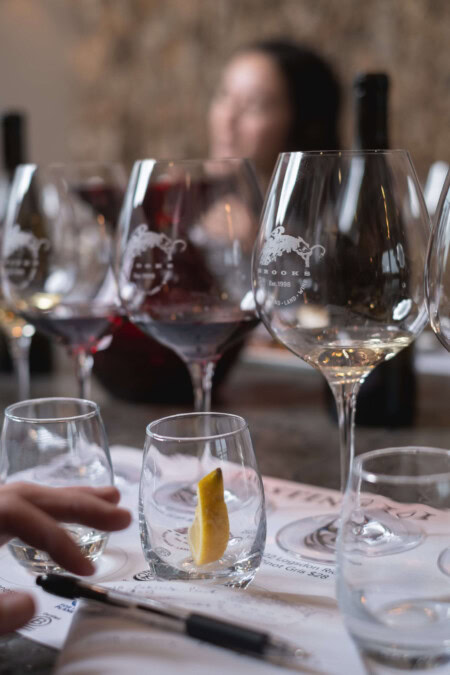
- Attend wine tastings: Occasionally, wineries and wine education centers offer “fault-focused” classes or tasting events to help wine drinkers and tasters recognize “off” aromas and flavors. Even when they are not currently offering that event, ask your tasting room host if their team has opened any off bottles that day so you can take a sniff.
- Take a wine class: Courses like WSET (Wine & Spirit Education Trust) teach fault identification as part of the curriculum. This particular organization is nationally recognized within the wine industry.
- Smell everything: The more you train your sense of smell with spices, fruits, and even “bad” scents, the better you will be at pinpointing faults. So spend longer than usual in the produce section and bulk bins on your next trip to the grocery store as you smell your way through the aisles.
- Keep a wine journal: Take notes on every wine you drink, especially if you suspect a fault. Over time, you will build a reliable memory bank.
Knowing how to recognize common wine faults can transform your wine tasting experience. Instead of second-guessing your palate, you will be able to spot cork taint, oxidation, and volatile acidity like a seasoned wine professional. Plus, you will be able to use niche-specific terminology that will put you even further ahead of the curve.
Remember, the next time something seems “off,” trust your senses. Wine is intended to be a full sensory experience, even when things go contrary to plan.
Update 7/4/2025

April Abate is a wine educator who loves helping people feel confident about what is in their glass. She is a Certified Specialist of Wine through the Society of Wine Educators and a Certified Executive Sommelier with the International Wine and Spirits Guild. With a diverse background in microbiology, education, hospitality, and sales, April brings science, clarity, and heart to her discussions about wine. Her goal is simple: to make wine more approachable by helping tasters understand not just what they like, but why they like it. For the past seven years, April has been part of the team at Brooks Wine in Oregon’s renowned Willamette Valley, sharing her passion for wines that tell a story of place and purpose. Drafting and refinement were supported by digital assistant software.