“ A seed is the dormant dream of a new life. A hope, a prayer, the smallest version of an entire life.”
-Jennifer Jewell, What We Sow
Despite a decade of farming, sowing seeds still fills me with a profound sense of hope. Whether in the quiet of a greenhouse or directly into the earth, tending to seedlings allows gardeners to appreciate the life cycle of plants fully. Raising a plant from delicate first germination and continuing to care for it through harvest shows us the tenderness of new life. It reminds us of the bounty a garden can share and the goodness of sharing. We miss this connection and sense of hope when we buy pre-sown seedlings from a nursery. While I can rarely resist the new tomato variety that catches my eye at a farmers’ market, most vegetables I grow have a unique feel to them. There is a sense that they are linked to me, having at some point been sown, sifted, and tended by my own hands.
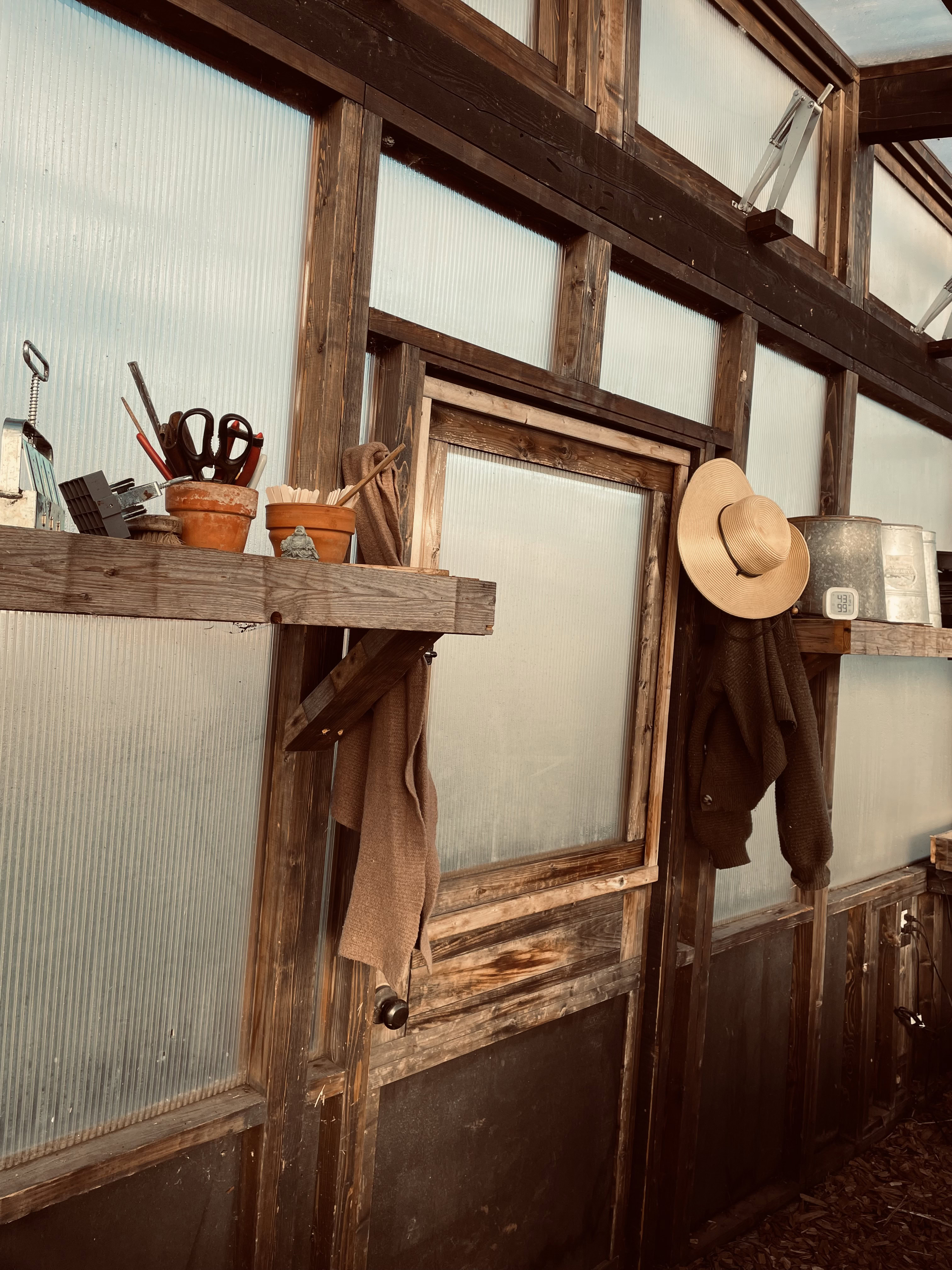
Stepping into the greenhouse on a late winter morning fills me with anticipation. There is a feeling of warmth and safety in that space, a place where life, with the occasional death, unfolds. Seeds deserve our deepest reverence; they represent thousands of years of selection and seed saving by people before us. When I hold the small yellow disk of a pepper seed in my hand, I am part of a tradition of farmers choosing to select, sow, thin, and lovingly press each seedling into the soil. It is no small task to continue this custom; to tuck a seed into soil is to be part of the very origins of agriculture. I create quiet within myself and in the space when sowing seeds. I prefer the early mornings when I can be alone with my thoughts, and for the most part, I’m joined by the call of birds and the steady beat of a frog off in the distance. I keep a mug of coffee resting nearby to keep me warm and invigorated for the ritual at hand.

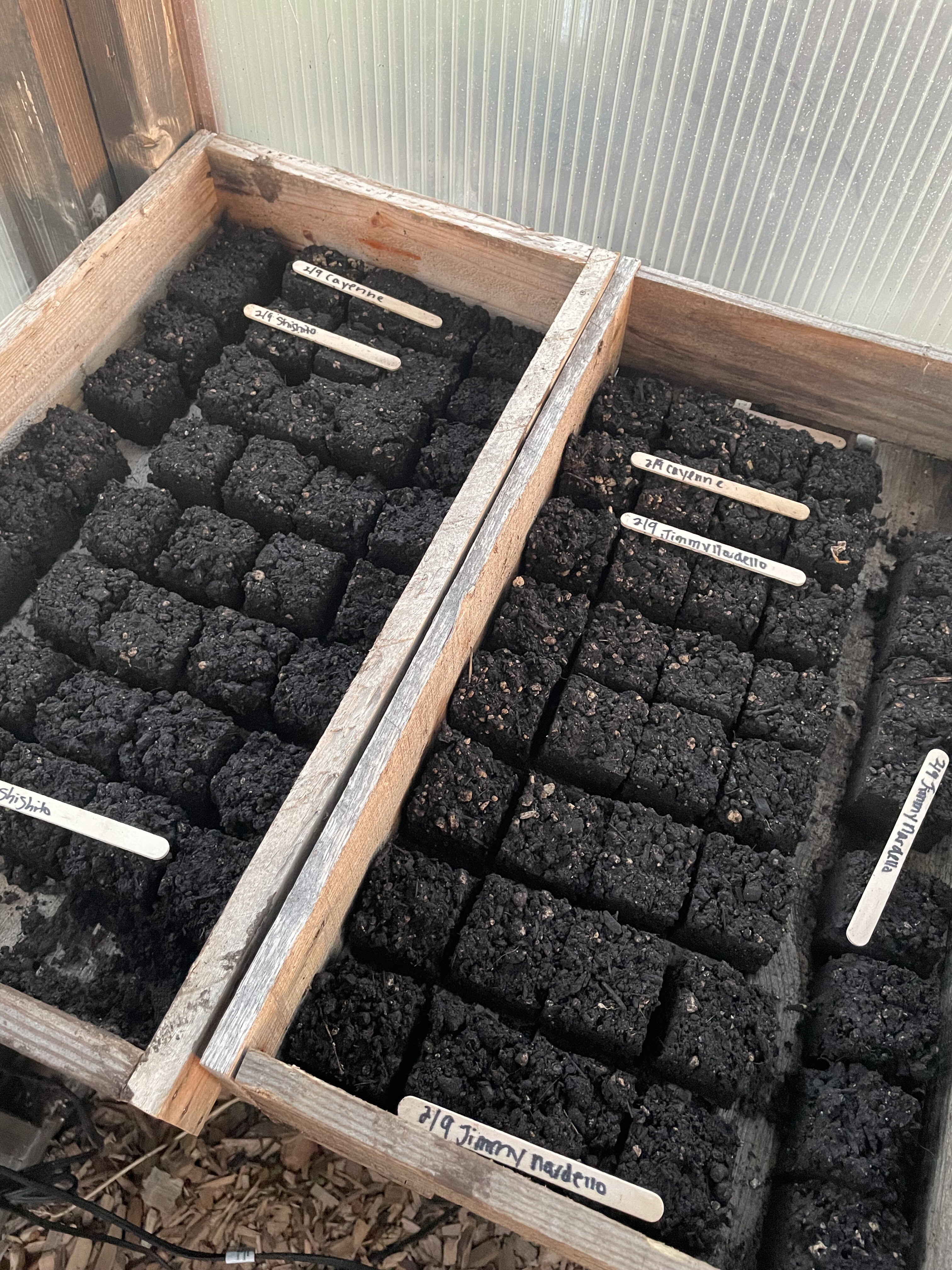
Recently, I’ve begun a new form of sowing in the greenhouse called soil blocking, a method that uses a metal device called a “blocker” to create small, pot-like cubes from the soil mix itself. It allows me to step away from plastic in the greenhouse. The process is slower than sowing into preformed trays and pots, a trade-off I gladly take. Adding water to establish a strong mix, I slowly fill trays made of old pallet wood. Once I have a couple of trays filled, my mind grows quiet. I surrender to the rhythmic motion of pressing blocks. On and on, the plink and suck of the soil blocker can be heard—a sound of new life ahead, of seedlings to come. As the stack of trays grows and my coffee recedes, the sowing finally begins. I methodically tuck two or three seeds into each square, offering a brief thought of gratitude for every one. Because nature offers no guarantees, these multiples ensure that at least one soul will stir within the soil.
By March, the greenhouse is consumed by this exacting ritual. Tray by tray, the space fills until every inch teems with potential. Then comes that inevitable spring moment: you step inside, moving from tray to tray, and feel that familiar surge of excitement. Year after year, the sight of those first tiny cotyledons never loses its power. This is the quiet magic of the seed. I feel that same jolt of connection when sowing directly into the garden beds, even with something as simple as a radish. At the first sign of green, I can’t help but think: I helped do that. From a single sunflower seed grows a giant that towers over me, eventually offering hundreds of seeds in return. Sowing humbles us; it reveals the radical abundance of the earth. It reminds us that when we give life to our plants, they, in turn, give life back to us.
With Love from The Garden,
Shannon
P.S. A special note that none of the garden “clean up” involves cutting back the garden beds. All the stems and debris of the garden remain standing in the garden borders until March. This allows invertebrates and wildlife to have habitat and nourishment through the winter months.
Farm to Table
Our tasting room menu this month features a tasting menu that highlights ingredients grown in our very own estate garden and sourced directly from local producers.