Quick Facts:
- A series of hands-on activities designed to strengthen a taster’s ability to accurately and confidently describe wine include building a wine tasting vocabulary using a flavor wheel to focus thinking toward recognizable categories.
- Taking simple, consistent tasting notes helps beginners remember preferences and describe wines with clarity and confidence.
- Comparing wines side by side is one of the fastest ways to improve sensory recognition because it helps the taster identify differences in acidity, body, and flavor.
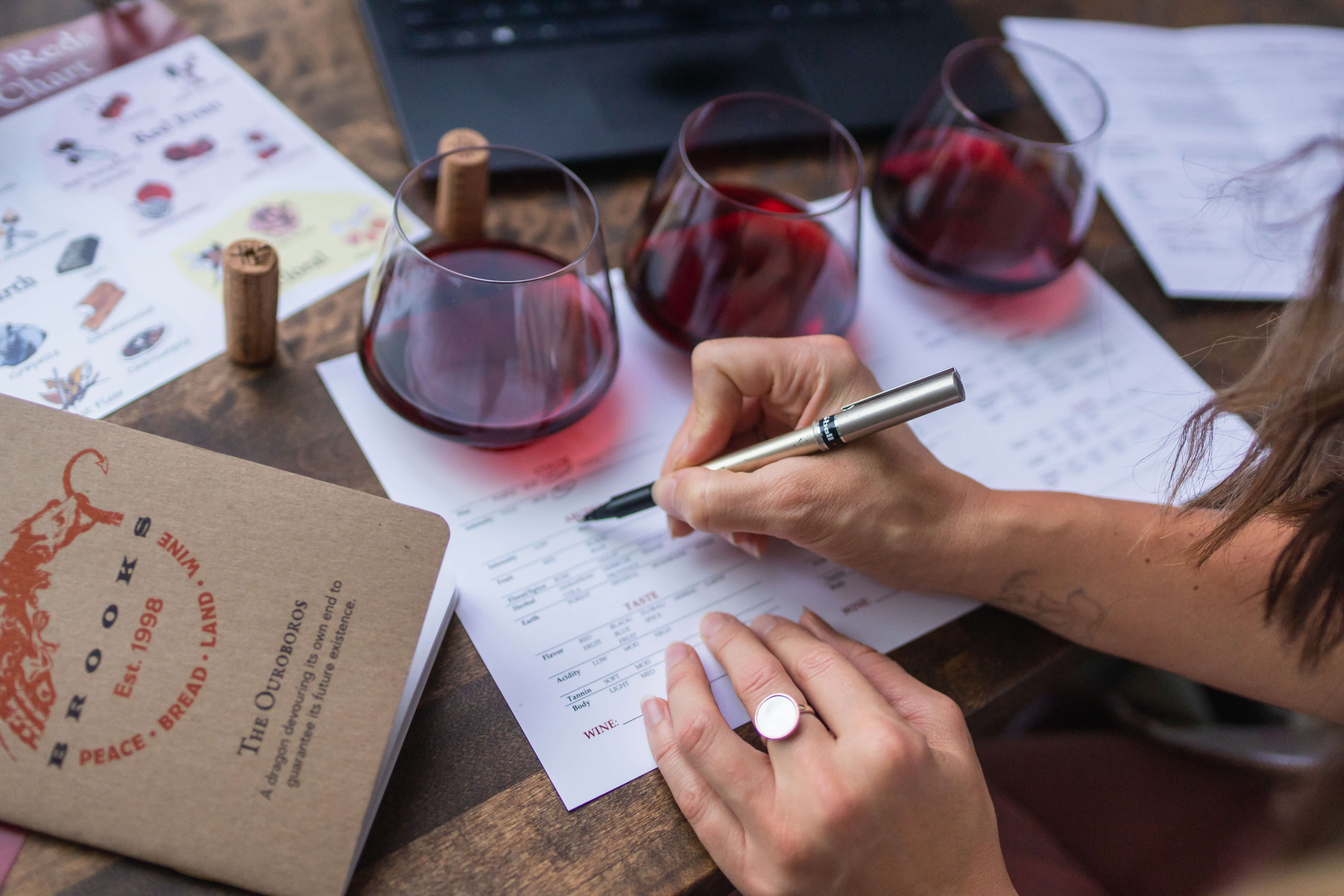
If you have ever taken a sip of wine and thought, “I know I like this, but I have no idea how to describe it,” you are not alone. One of the most common challenges for beginners is putting flavors into words. Describing wine does not require having a “perfect palate.” It is actually a learned skill you can build with a little structure, curiosity, and practice. (And the homework is fun!)
Read on to turn that uncertainty into confidence with a few practical strategies and interactive exercises you can start using right away.
Why Does It Feel So Difficult to Describe Wine?
Wine is complex. Truly! A single glass can contain over 1,000 aromatic compounds, and your brain is trying to process all of them at once. Without a reference point, it is a bit like trying to name a color you have never seen before.
Most beginners default to vague terms like “good,” “smooth,” or “strong.” While those may indeed be accurate, these descriptors do not help you identify or remember what you like, and they definitely do not assist you with communicating your preferences to others.
Indeed, take time to build a tasting vocabulary rooted in familiar flavors and identifiable preferences.
Strategy #1 – Use a Flavor Wheel
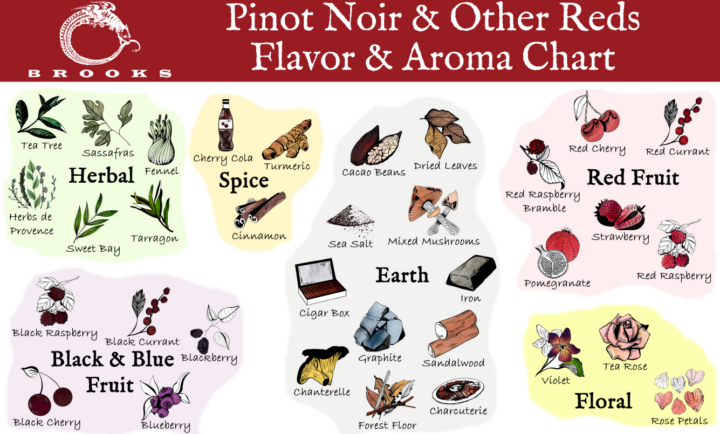
A wine flavor wheel is one of the most effective ways to bridge the gap between what you taste and how you describe it because it keeps you focused. It helps sort through the overwhelming possibilities by organizing aromas and flavors into easy to identify categories like fruit, floral, spice, and earth.
Note: While there are flavor wheels that add additional categories to their format, it is recommended to start with basic options as a beginner to stay engaged and prevent discouragement.
Homework: Flavor Mapping
Next time you pour a glass:
- Take a sip and pause.
- Ask yourself: Is this more fruity, floral, spicy, or earthy?
- Once you pick a category, go one level deeper.
- Fruit = Citrus, berry, or tropical?
- Spice = Pepper, baking spice, or herbal?
- Now go another level further.
- Citrus = Orange, lemon, lime, grapefruit?
- Berry = Red, blue, black?
- Tropical = Pineapple, mango, starfruit, coconut?
- If you can, push even further with one additional level of identification. This is where the magic happens (and where wine labels descriptions are created).
- Lemon = Zest, fresh-pressed juice, lemon drop candy, meringue pie?
Pro Tip: Your first instinct is often more accurate than your second guess. Try not to overthink it. Even identifying “red fruit” vs. “dark fruit” is a win, especially when building your skills.
Strategy #2 – Build a Personal Flavor Index
As with most success stories in life, self-awareness is everything. In other words, you cannot describe what you have never consciously noticed. The more you connect wine flavors to real-life experiences, the easier it becomes to recall them.
Homework: Scent Calibration
Head to your kitchen and smell 3-5 everyday items with focused and intentional awareness.
- Lemon or orange
- Celery or bell pepper
- Black pepper
- Star anise
- Vanilla extract
- Chocolate bar
- Fresh herbs
Go one step further by comparing two items side by side to level up your awareness:
- Lemon vs Orange
- Peach vs Apple
- Granny Smith apple vs Cosmic Crisp apple
With consistency, the awareness you have built will establish a keen reference point for your brain. The next time you taste wine, instead of “this smells familiar,” you will instinctively think, “this reminds me of Granny Smith apple.”
Pro Tip: This exercise may feel simple, but it is exactly how professionals train their palates. This activity also works with non-edible everyday items such as leather, rubber, pool toys, garden soil, etc.
Strategy #3 – Take Better Tasting Notes
Detailed notes are where real progress happens. Your notes do not need to be formal or intimidating, but they do need to be consistent.
Try this simple framework:
- Look: What color is it? Pale or deep?
- Smell: What aromas does it remind you of?
- Taste: Sweet, dry (i.e., not sweet), acidic, bold, tannic (i.e., dry or textured sensation on tongue)?
- Finish: Does the flavor linger or fade quickly?
Homework: The 3-Word Challenge
The average adult’s memory has limited capacity, and typically can only remember 3-5 pieces of new information at a time. After tasting, write down just three words to summarize your description of the wine.
For example:
- “Crisp, citrusy, refreshing”
- “Dark, jammy, bold”
This keeps things approachable while training your brain to identify key characteristics. It also helps you put an end cap on the multitude of possible descriptions so you can move on to the next wine.
Strategy #4 – Compare Wines Side by Side
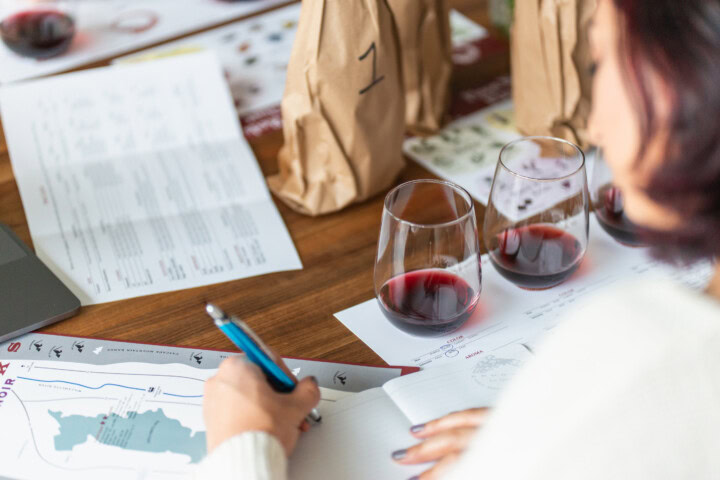
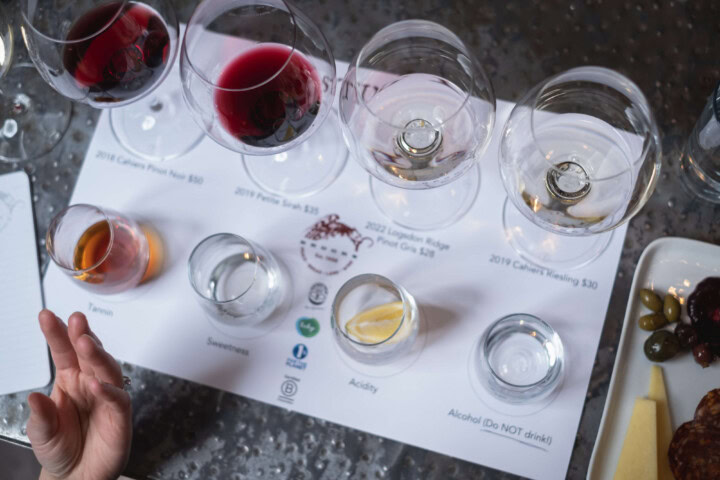
If there is one exercise that accelerates learning, it is comparison. There is a reason wine tastings involve a flight of several wines to try in succession or at the same time. Tasting wines back-to-back highlights differences you might otherwise miss. When offered side by side, the taster can revisit each wine to fine tune the descriptors.
Homework: The Mini Tasting Flight
Pick two wines with a clear contrast:
- A light white vs a full-bodied white (Dry Riesling vs California Chardonnay)
- A fruit-forward red vs a more earthy red (Oregon Pinot Noir vs Bordeaux)
Taste them in alternating sips and ask:
- Which one feels more acidic?
- Which has stronger fruit flavors?
- Which has a more pronounced tannin structure?
- Which lingers longer?
Comparison sharpens your sensory awareness quickly. It is the difference between tasting in isolation and tasting with intention.
Strategy #5 – Say It Out Loud (Yes, Really)
Describing wine internally is helpful, but saying it out loud reinforces your learning. By engaging multiple sensory processes (i.e., motor action in speaking and auditory with listening), you are processing the information twice, and far more likely to keep the memory.
Homework: Narrate Your Sip
With a friend (or even solo), describe what you are tasting in real time:
- “I’m getting something bright… maybe citrus… like lemon or grapefruit.”
- “I smell earth…forest leaves and damp soil…dark fruit, too…a berry.”
It might feel awkward at first, but this practice builds fluency and confidence faster than silent tasting.
Pro Tip: To avoid tasting bias, taste different wines than your tasting partner. Or taste them in a different order. This helps protect your thoughts from mirroring the tasting description your partner gave before you had the same tasting opportunity.
Pitfalls to Avoid:
- Chasing the “perfect” answer – There isn’t one. Your perception is valid. Trust yourself.
- Overcomplicating descriptions – Start simple and build from there.
- Comparing yourself to others – Everyone starts somewhere. Even sommeliers.
Learning to describe wine is not about memorizing a script. It is about developing awareness. Over time, you will notice patterns in what you enjoy and be able to articulate them with ease. The best part? The more you practice, the more confident and accurate you become. Each glass turns into a mini exploration rather than a guessing game.
Interact with your next glass, rather than just drinking it. Ask questions, take notes, compare, and most importantly, savor and enjoy the experience. Afterall, wine is intended to be a pursuit of pleasure and joy. Cheers!
4/19/2026
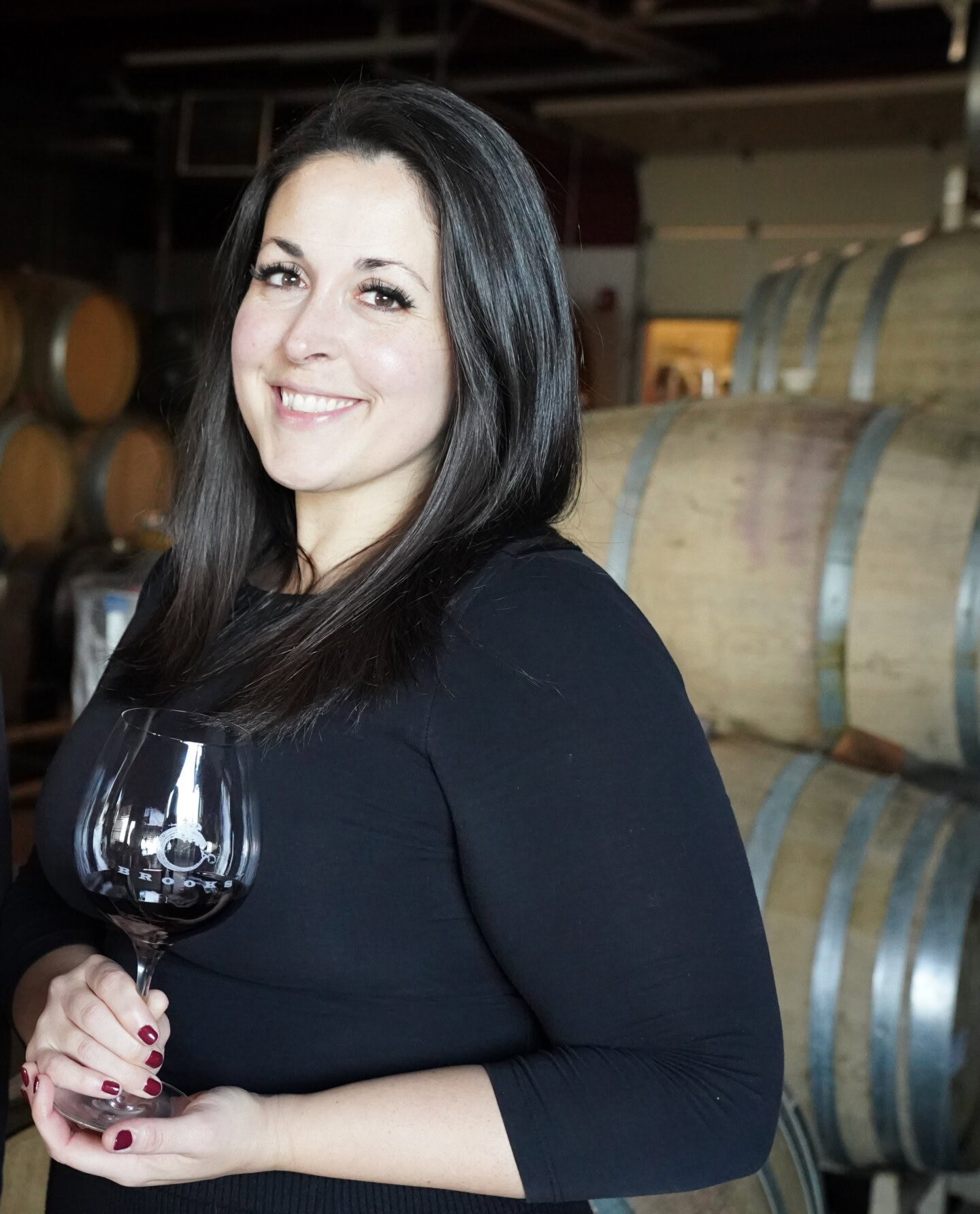
April Abate is a wine educator who loves helping people feel confident about what is in their glass. She is a Certified Specialist of Wine through the Society of Wine Educators and a Certified Executive Sommelier with the International Wine and Spirits Guild. With a diverse background in microbiology, education, hospitality, and sales, April brings science, clarity, and heart to her discussions about wine. Her goal is simple: to make wine more approachable by helping tasters understand not just what they like, but why they like it. For the past seven years, April has been part of the team at Brooks Wine in Oregon’s renowned Willamette Valley, sharing her passion for wines that tell a story of place and purpose. Drafting and refinement were supported by digital assistant software.