
“Sitting in your garden is a feat to be worked at with unflagging determination and singlemindedness…True gardeners, with their peerless taste, dexterity and inspired planting, never stop…To sit is almost an offense, a sign of depravity and an outrage towards every felicitous refinement that has gone into making a garden…I am deeply committed to sitting in the garden.”
-Mirabel Osler, The Garden Bench
It is now, when the leaves have fallen and begin composting, that the year truly begins for me. From this death and dormancy, I see an opportunity for rebirth all around us. There is still much to do around the farm and gardens. The bees are being tucked in for the winter with warm insulating boards. Vegetable garden beds are mulched with the bedding from the chicken coop, and compost piles are tarped for the winter rains ahead.
Amidst all this activity, I must admit that I find myself taking more moments to look around. I marvel at frosty spiderwebs shaking in the wind, and the stray blooms that somehow resist the call of dormancy and still flower. These quiet times are becoming increasingly valuable to me because of their rarity. In the past, guilt would quickly pull me out of these musings, but now I relish them. I stare more deeply, as if in defiance of the clock, attempting to memorize the outlines of whatever has captured my attention.
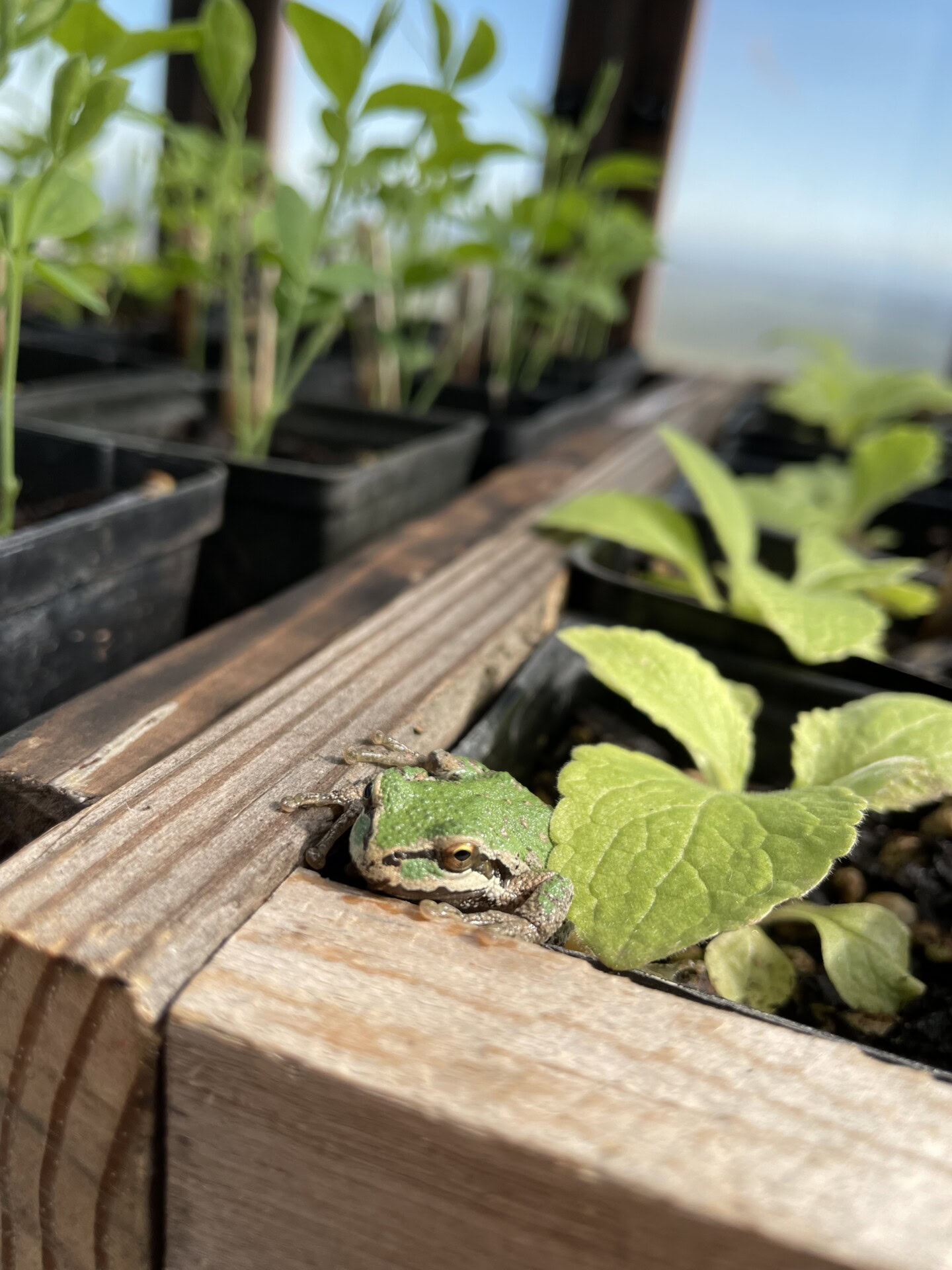
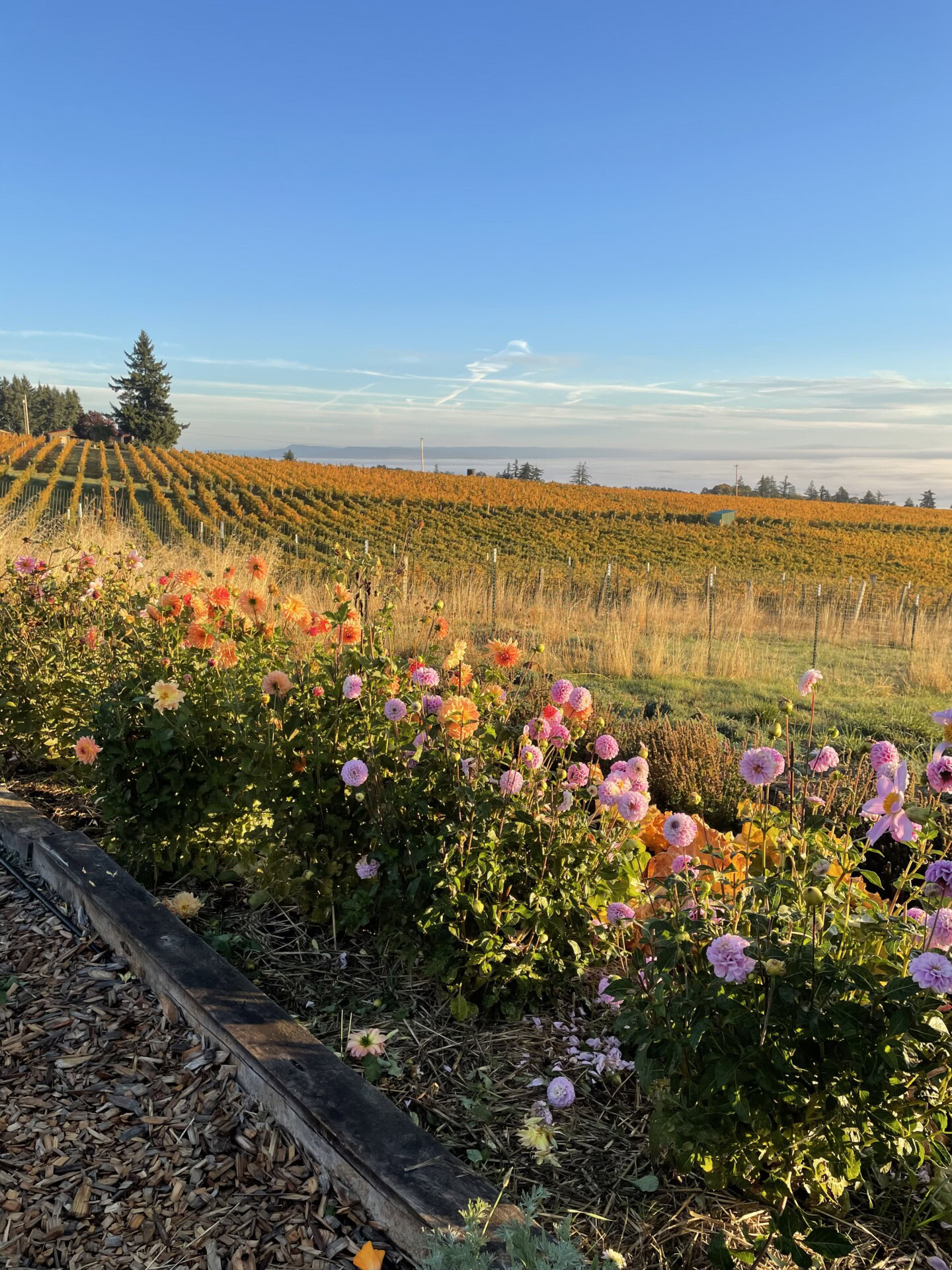

These moments of reflection are also opportunities for planning, allowing us to set ourselves up for greater success. Just as we sow the seeds of a new year’s resolution, this is the time at the farm when we sow the seeds for healthy soil. In the early weeks of autumn, when the soil is still warm from the summer sun but rains are on the way, we sow our cover crop seed. The cover crop is drilled into the existing ground cover and germinates almost within days of the first rains. Weeks later, the tiny shock of green seedlings is reminiscent of spring—small green silhouettes that signal healthy soil, water holding capacity, and nutrient cycling.
With all this set in motion, it would be easy to walk away for the winter, but a remaining piece of the puzzle must be addressed. Compost ties all these systems together. In every row of the vineyard, I spread the mix of cow manure, straw, and grape pumice that has been aging for the last two years in our field. The resulting mix is black with a texture so soft and earthy that I can’t help but sift up handfuls in amazement at its transformation. The freezing and thawing of winter will work this compost into the soil, providing improved soil structure and nutrients for the vines and all the plants that call the vineyard home.
When winter is on its way, I relish these final sunny days that are interspersed with deluges of rain, allowing time for planning, observing, and refining. I walk in my rain gear and improve on last year’s work. Most importantly, I let the soil rest, and I rest myself. This is the time to sit in the garden, something I so often forget to do. Nature is never in a hurry; we cannot quicken the pace of a plant’s growth by wishing for it. Instead, I take comfort in knowing that this cycle of death is part of the cycle of growth. I sit patiently, wondering what we will make of it.
With Love from The Garden,
Shannon
Farm to Table
Our tasting room menu this month features a tasting menu that highlights ingredients grown in our very own estate garden and sourced directly from local producers.