
Pairing wine and cheese is one of those time-honored culinary pleasures that can make even a casual gathering feel rich and elegant. The right wine-and-cheese duo can thrill your senses and spark conversation. In this guide, you will learn how to make smart matches, highlight classic combinations, and create your own pairings with confidence.
Why Wine and Cheese Work Together
From a scientific perspective, wine and cheese pair well together because of how their chemical and sensory properties interact, particularly in balancing fat, acid, tannin, and flavor compounds on the palate.
Fat and Tannin
Cheese is high in fat and protein, which coat the tongue and can mute astringent sensations from wine. Red wines contain tannins. Tannins are polyphenolic compounds that create dryness or bitterness by binding with proteins in saliva. This can create an astringent (i.e., dryness) in the mouth when sipped on its own.
When cheese is eaten before or with wine, the fat and proteins bind with tannins instead, softening the wine’s perceived harshness and creating a smoother mouthfeel.
Tip #1: Fat + tannin = smoother, rounder perception of wine (especially with red wine)
Fat and Acid
Many wines are high in naturally occurring acid, especially cool climate whites, sparkling wines, and lighter reds. The acidity of the wine acts as a solvent to help cut through the high fat content of cheese. This cleanses the palate and refreshes the senses after each bite.
The balance between acid and fat prevents the cheese from feeling overly rich or the wine from seeming too sharp.
Tip #2: Acid + fat = refreshing equilibrium on the palate (especially with cool climate white wine and sparkings)
Similar Flavor Molecules
Wine and cheese share volatile aromatic compounds (i.e., esters, aldehydes, and ketones), which means they contain organic chemicals that easily vaporize at room temperature and release in the air as scented gas. Perfume and coffee are two additional examples of household staples we are enticed to use because of these compounds.
In wine and cheese, volatile aromatic compounds contribute fruity, nutty, or buttery aromas. When these shared compounds are matched, they amplify each other and enhance complexity. For example, diacetyl contributes a buttery note in both oak aged Chardonnay and Gouda, so they are an excellent pairing from a flavor perspective.
Tip #3: Shared aromas will enhance the harmony of the pairing and the depth of your enjoyment (even if you do not know the exact chemical composition of either so just trust yourself and your nose).
Sensory Contrast
Humans tend to enjoy contrast in texture and taste. Examples include simple pairings like chips and dip (i.e., creamy vs crisp) and more elevated dishes like prosciutto wrapped melon (i.e., salty vs fruity).
The interplay between these sensations creates a surprising balance because it feels satisfying both chemically and psychologically.
Tip #4: Contrast activates more sensory receptors and enhances pleasure. Try a sharp salty bleu cheese with a medium-sweet Riesling. Bonus points for including ginger snaps on the side. Trust us!
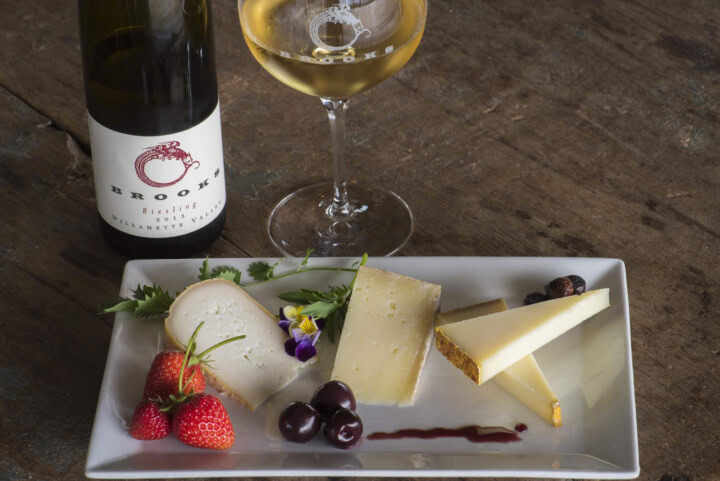
Basic Pairing Guidelines by Cheese Type
If you are still easing your way in, continue reading to find easy pairings by cheese style. Use these as trusted starting points to pair wine and cheese, then adjust based on your palate and the wine you have.
Fresh Cheeses
- Examples: mozzarella, ricotta, fresh goat cheese
- Characteristics: These have light, creamy, mild flavors.
- Pairing: A crisp Sauvignon Blanc or a dry Riesling. The acidity and freshness help carry the cheese’s subtlety,
Soft Cheeses
- Examples: Brie, Camembert, double-cream cheeses
- Characteristics: Rich, buttery textures and mellow flavor
- Pairing: An oak aged Chardonnay (remember, this wine style presents the buttery quality) or a sparkling wine or Champagne (the effervescence cuts through creaminess).
Semi-Hard Cheeses
- Examples: Gruyère, Gouda (medium age), Comté
- Characteristics: Nutty, firmer texture, more flavor depth.
- Pairing: Medium-bodied reds like warm climate Pinot Noir or Merlot. The fruit and structure complement without overpowering.
Hard (Aged) Cheeses
- Examples: Parmesan, aged Pecorino, aged Gouda
- Characteristics: Granular texture, intense savory and nutty flavors.
- Pairing: Bold reds such as Cabernet Sauvignon or Chianti have the structural and flavor backbone to match these cheeses.
Blue Cheeses
- Examples: Roquefort, Gorgonzola, Stilton
- Characteristics: Strong, assertive flavor, saltiness, and tang.
- Pairing: Dessert wines like Port or Sauternes. The sweetness offsets the sharpness and salt, while still creating harmony.
Flavored Cheeses
- Examples: Boursin, Havarti with horseradish and chive, Cranberry-infused white cheddar
- Characteristics: These are cheeses with herbs, spices, infusions.
- Pairing: Choose a wine that picks up or complements the added flavor note. For example: herbed goat cheese with Sauvignon Blanc and a red pepper-infused cheese with a fruity Zinfandel.

Pro Tips to Elevate Your Wine and Cheese Pairings
Here are a few additional takeaways to remember to take your wine and cheese pairings from “good” to “memorable.”
- Trust yourself and experiment. No pairing rule is set-in-stone. If you like the combo, it is a winner. As one expert says: “If you like the taste of the wine and cheese you selected to eat together, then, by all means, you have succeeded.”
- Serve at the right temperature. Each element has an ideal temperature to properly present their unique and tantalizing characteristics. Whites & rosés need to be chilled, but not too cold, so pull them from the fridge about 10 minutes prior to serving. Reds should be slightly cool or room temperature (55-65°F). Surprisingly, cheese best present their flavors at room temperature.
- Build a cheese board. Exploration gives you and your guests options and encourages each taster to discover their own personal favorite pairings. Select 3-5 cheeses with varied textures and flavors. Add nuts, fruits, and crackers or bread. Then match each with a wine. The conversations that result will be truly enjoyable (and probably quite memorable).
- Use regional pairings. “What grows together goes together” is a helpful saying. It guides us to choose cheese and wine from the same region because they often share terroir and flavor. No need to stress over this tip though. Apply the other guidance when supplies (or budget) are limited.
- Be mindful of tannins. Big, tannic reds can dominate delicate cheeses, regardless of fat content. If you are serving a gentle cheese, choose a wine with lower tannin or more acidity.
While pairing wine with cheese can be intimidating, it certainly does not need to be. Take some time to understand the core principles, apply the rough guidelines, and trust yourself as you experiment. You will find combinations that feel both fun and refined. Of course, if you prefer to stick with classic pairings, you will have an opportunity to savor the experience while educating your palate for more exploration next time. Without delay, gather your favorite cheeses, pick up a couple of wines (especially the bottles you keep curiously pulling off the shelf), and enjoy. Cheers!
Posted 11/1/2025

April Abate is a wine educator who loves helping people feel confident about what is in their glass. She is a Certified Specialist of Wine through the Society of Wine Educator and a Certified Executive Sommelier with the International Wine and Spirits Guild. With a diverse background in microbiology, education, hospitality, and sales, April brings science, clarity, and heart to her discussions about wine. Her goal is simple: to make wine more approachable by helping tasters understand not just what they like, but why they like it. For the past seven years, April has been part of the team at Brooks Wine in Oregon’s renowned Willamette Valley, sharing her passion for wines that tell a story of place and purpose. Drafting and refinement were supported by digital assistant software.