“Nature is a strange factory, relentless in its productivity. We like to think life and death are opposite states, but it’s all tangled up together, the cherry blossoms and the cancer: a never-ending production of more, a monstrous fecundity.”
-Olivia Laing, Funny Weather
When I look around my gardens, I feel that they resemble my own current feelings: unruly and wild, with a mind of their own. In the blink of an eye, the bearded iris that flanked the pond has gone over, and foxgloves poke out their inflorescences in their stead. The climbing roses are coming to an end, their shattered petals scattered on the garden paths. Prolific seed heads burst throughout the entire garden, plants pushing out into the walkways, roses heaving themselves over fence posts, grasping into the air for light.
I expected myself to feel overwhelmed by the sheer abundance of all that needed to be done. Late spring is a notoriously difficult time for gardeners to catch their breath. Yet, rather than letting my to-do list feel like a burden, I have quietly grabbed my pruners and gone about the work, knowing that it will somehow all get done. I’m not entirely sure where this deep understanding came from—this knowing that I have the capability to complete the tasks in the end. It could be the past five years I have spent in this garden, in this home away from home. Maybe it is trust in myself and what I can do. Maybe it is also a willingness to surrender to imperfection, knowing that it is simply a fact of life. I like to think it is a bit of both, alongside the knowledge that this garden is resilient and has withstood far more than my own temporary inability to attend to every task.

What I have come to realize this last month is that I have been pushing myself through my time in the garden with a jumbled list of chores in my head. I rushed from one task to another, never giving myself time to breathe and observe. When I finally slowed down, I noticed a mother Robin in the potager garden, slyly eyeing her nest in the roses. This one act of observation—and the realization that I was causing stress to this mother bird—prompted me to limit my time in that space. By stepping away from my own worries and concerns, and being present with what the garden had to offer, I was able to make the life of another creature just a little easier.
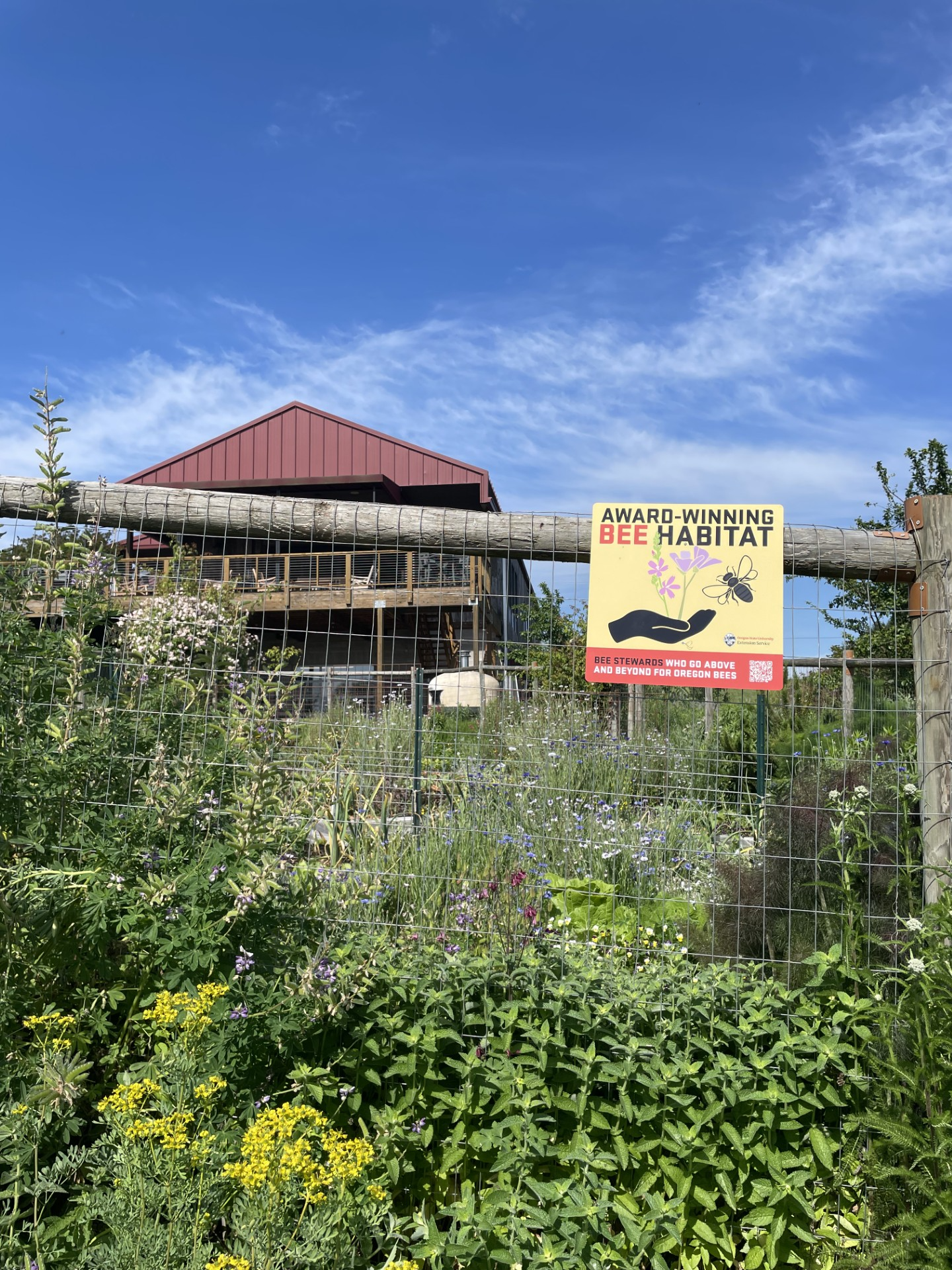
In my own garden one evening, I was walking about weeding gently, stopping to observe the Nicotiana open up. When I looked up, I saw so many insects going about their evening rituals. I felt a sense of absolute delight, knowing I had played a hand in giving them this habitat, and this opportunity to thrive. That evening, I felt a sense of looseness in the garden; I had no rigid sense of purpose. I simply pottered, gently moving through the space, tweaking plants here and there. I wasn’t stressed, and I didn’t have a single job to complete. Instead, I plucked a weed, snipped a spent bloom, and stopped to observe. I felt like maybe I had been gardening wrong all this time. This is how it was supposed to be.
“Pottering” is a term used more in England than in the United States, a fact that I think says a lot about the gardening cultures of both countries.. Pottering implies moving with ease, working in a relaxed way with no fixed goal. There is a sense of pleasure in the aimless nature of the work, an enjoyment in the physical sensation of moving and improving your space without a fixed outcome. I’m learning that when I carve out time for myself where there is space and opportunity for quiet, chores can become opportunities for pottering. Now, of course, I know there are times in the garden when we need to have a drive—that compost will not spread itself. But I was realizing I didn’t have enough of these quieter moments, these loose and objectless moments of pottering about.
It’s funny that such a straightforward thing can feel so deeply novel. To merely walk around your garden with no agenda shouldn’t feel like such a triumphant self-discovery. Yet here we are, in a world where each day leaves a lingering sense of tasks left uncompleted. As effortless as it should be, I’m learning to loosen my grip on what must be done, and rather just exist, working in ways that feel intuitive. I am listening to my internal knowledge that, in the end, what really matters is not the imperfections, but the choosing to show up each day to make our worlds a little better.
With Love from The Garden,
Shannon
P.S. A special note that none of the garden “clean up” involves cutting back the garden beds. All the stems and debris of the garden remain standing in the garden borders until March. This allows invertebrates and wildlife to have habitat and nourishment through the winter months.
Farm to Table
Our tasting room menu this month features a tasting menu that highlights ingredients grown in our very own estate garden and sourced directly from local producers.